Travels in North Dakota, Part IV: Knife River Indian Villages National Historic Site

By Lotte Govaerts

(This post was originally published on the Rogers Archaeology Lab blog on February 03, 2018. You can see the original post archived here.)

This post is part of a series on a recent trip to North Dakota. You can find previous installments here, here, and here.

Knife River Indian Villages National Historic Site includes 1,758 acres of National Park, just north of Stanton, North Dakota. Inside the park boundaries are over 50 archaeological sites, estimated to span a period of about 8,000 years. The main points of interest are the remains of the large villages that gave the park its name.
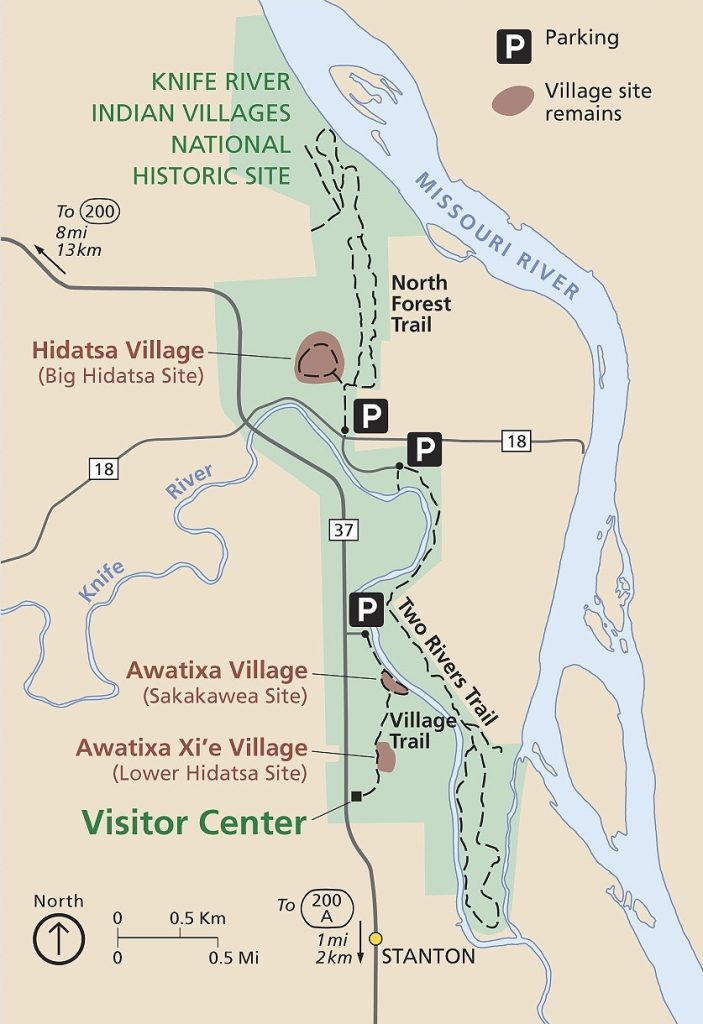
The map shows the boundaries of the park along the Missouri River and routes 18 and 37. It has the locations of Hidatsa Village, Awatixa Village, and Awatixa XXi'e Village labeled.
A Map of Knife River Indian Villages National Historic Site. Source: National Park Service.

Here is a Knife River Indian Villages National Historic Site introductory video by the National Park Service:

Awatixa X’ie or “Lower Hidatsa” village was established by the Awatixa Hidatsa subgroup around 1525 , and was occupied until 1780–85. The village covered 10 acres and there were at least 50 earth lodges. Approximately 500 to 600 people lived here until the village was abandoned after the smallpox epidemic that struck the area in the early 1780s. The survivors temporarily moved away before returning to the area to establish Awatixa Village, which was occupied ca. 1790–1834. This village included approximately 60 lodges, though the population fluctuated over time. It was burned in a raid in 1834. Awatixa Village is also sometimes referred to as Sakakawea Village, because this is the village where Sakakawea lived before she joined the Lewis and Clark expedition. The site has partly eroded into the river. Hidatsa Village, or Big Hidatsa was founded by the Hidatsa-proper Hidatsa subgroup around 1600. This village covered approximately 15.5 acres, and included some 100 earth lodges. Population estimates for this village range between 830 and 1200. It was abandoned in 1845.
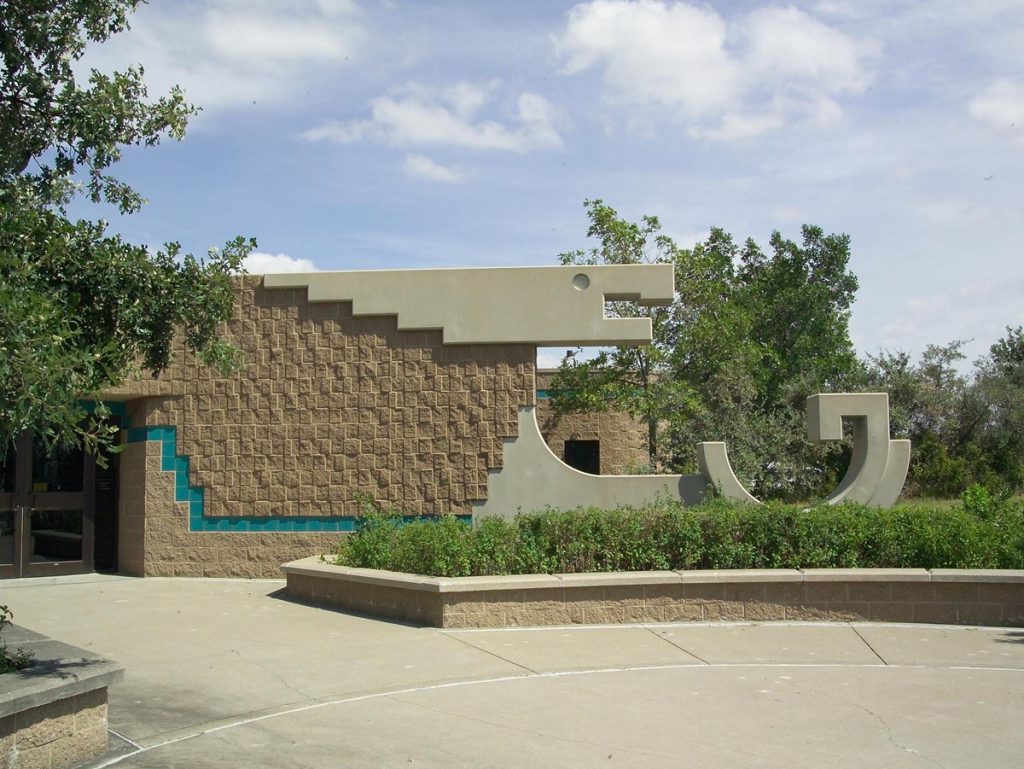
Exterior of the visitor center building. It includes decorative architectural elements
The entrance to the visitor center at Knife River Indian Villages National Historic Site, in summertime. Mat and I were far too cold to take a picture of the exterior of the building when we visited during a blizzard. Photo: National Park Service.

When Mat and I visited Knife River Indian Villages National Historic Site, it was still extremely cold and windy, so we did not walk any of the trails or see any of the village sites. Fortunately, there is a lot to see indoors at the visitor center, as well. The exhibits inside include artifacts recovered from the village sites, alongside decorative arts made by Northern Plains Indians and replicas of tools and other objects. Below are just a few examples.
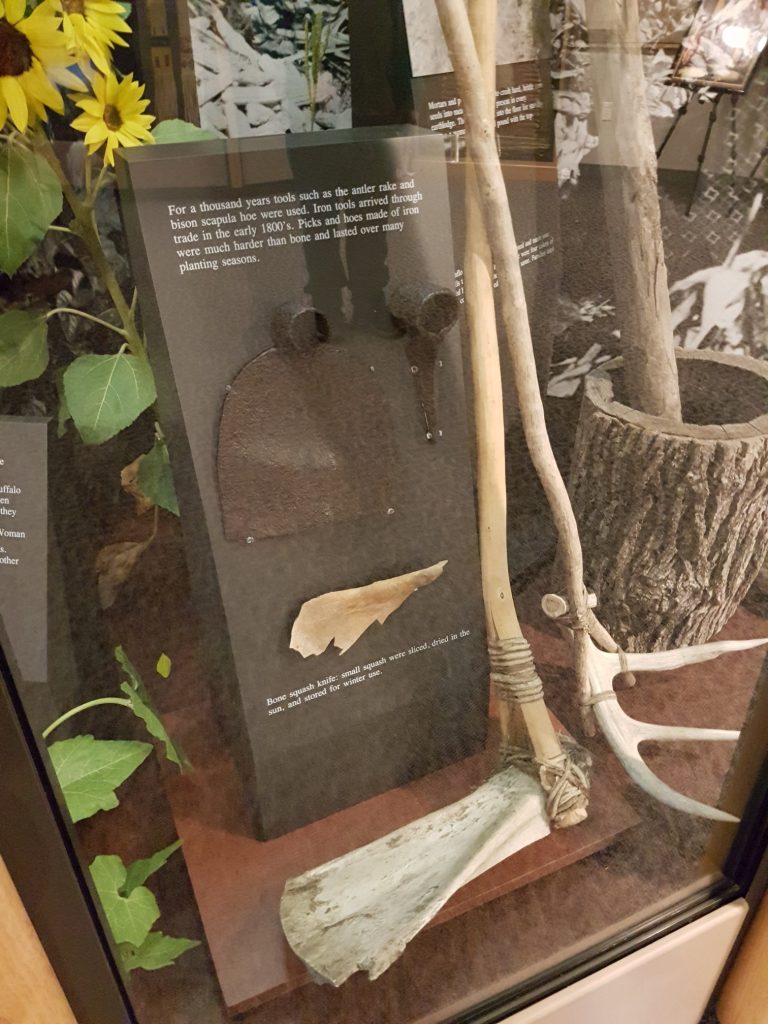
A scapula hoe and a wooden-handled rake, made from antlers. The display case also includes metal objects for comparison. Text reads, "For a thousand years tools such as the antler rake and bison scapula hoe were used. Iron tools arrived through trade in the early 1800s. Picks and hoes made of iron were much harder than bone and lasted over many planting seasons."
An exhibit case showing tools made out of animal bone. Our archaeological collections here at NMNH include many of these bones without the wooden handles, as you may have seen in previous blog posts. Photo: Lotte Govaerts
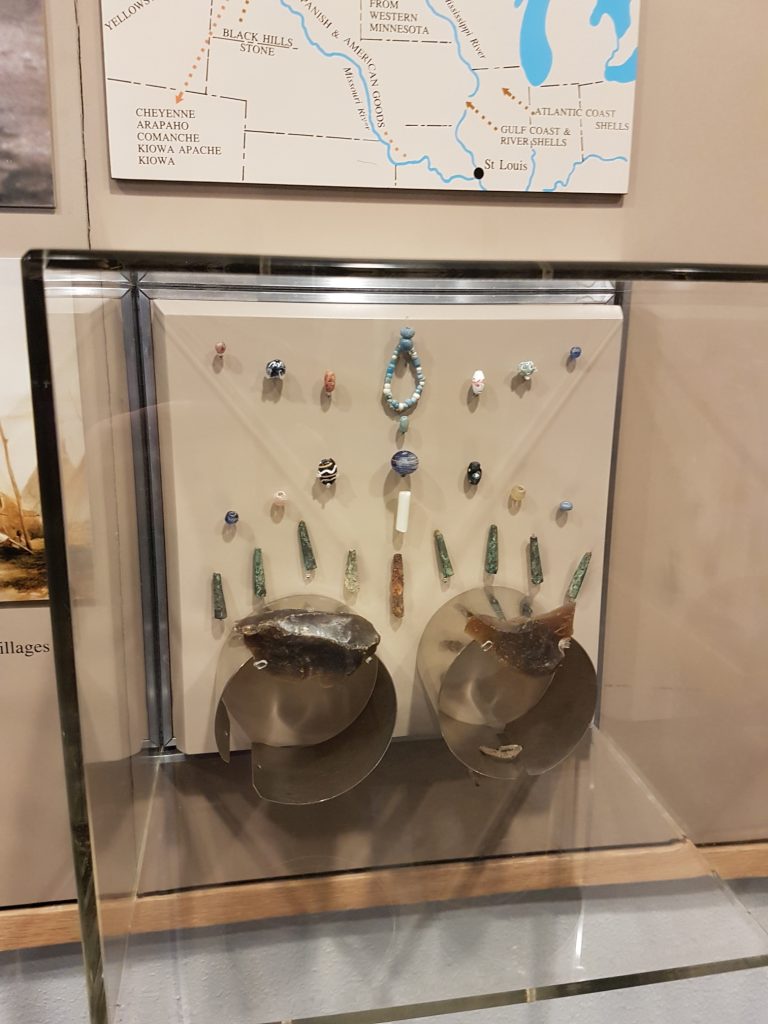
Glass display case with pieces of Knife River flint, glass beads, and metal tinklers. No text.
An exhibit case showing some local artifacts, including Knife River flint, glass beads, and metal tinklers. Photo: Lotte Govaerts
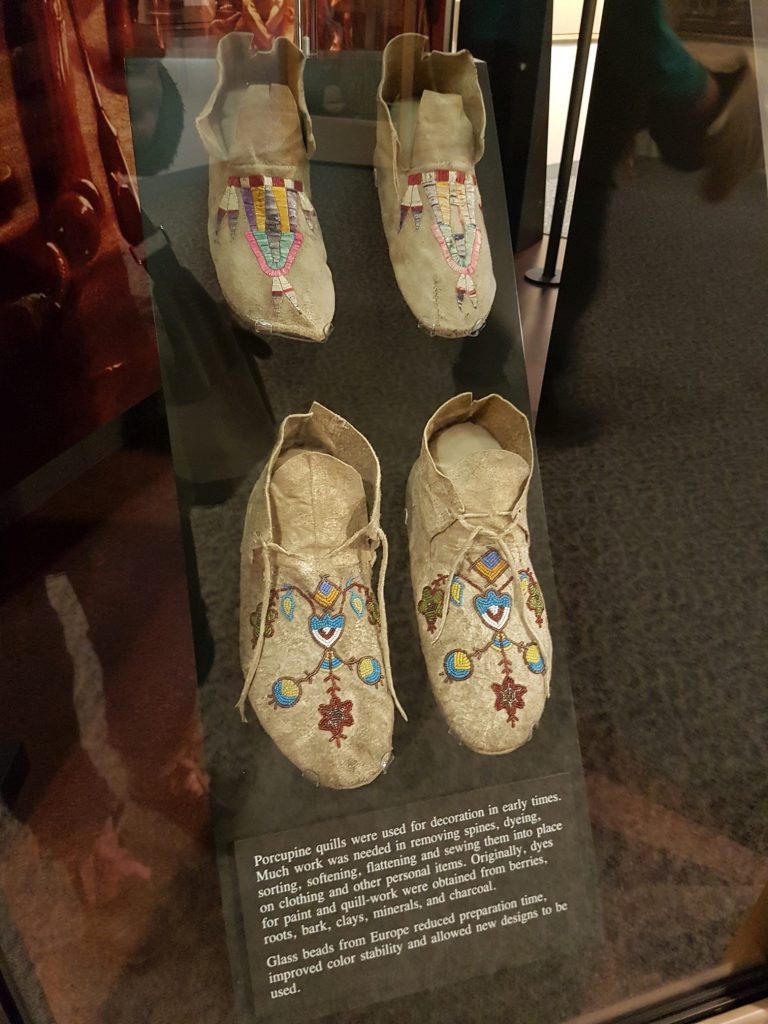
This display case contains two pairs of shoes: one decorated with porcupine quills, one with glass beads. Text reads, : Porcupine quills were used for decoration in early times. Much work was needed in removing spines, dyeing, sorting, softening, flattening and sewing them into place on clothing and other personal items. Originally, dyes for paint and quill-work were obtained from berries, roots, bark, clays, minerals, and charcoal. Glass beads from Europe reduced preparation time, improved color stability and allowed new designs to be used."
An exhibit case showing porcupine quill decorations alongside glass bead decorations. Photo: Lotte Govaerts.
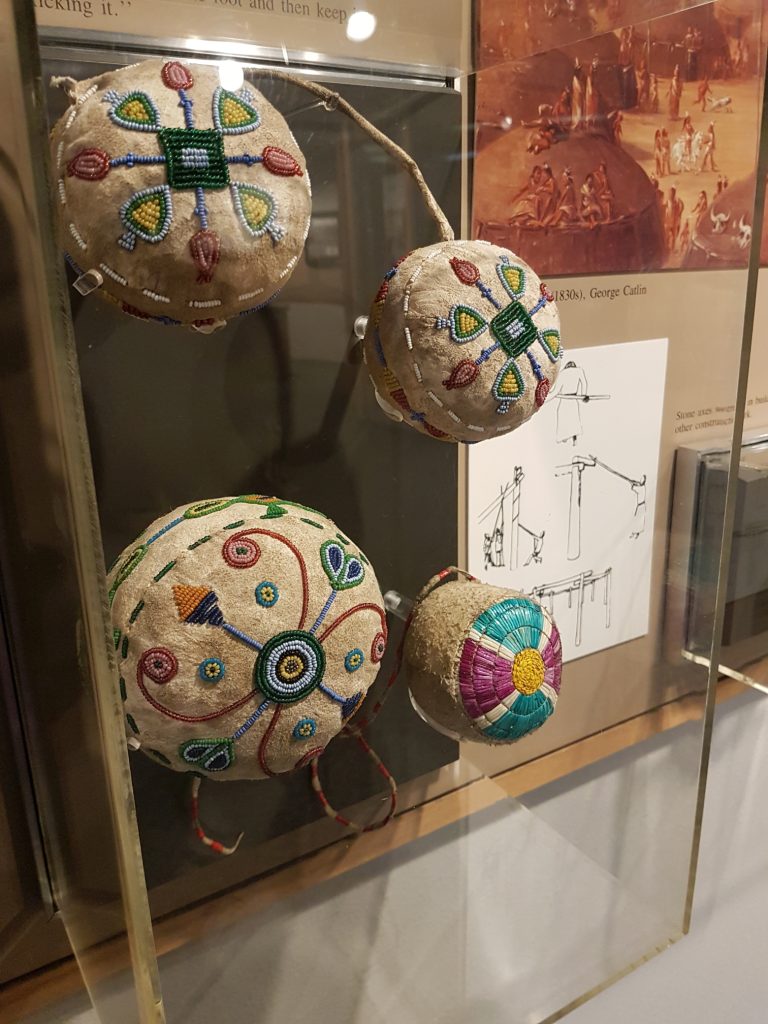
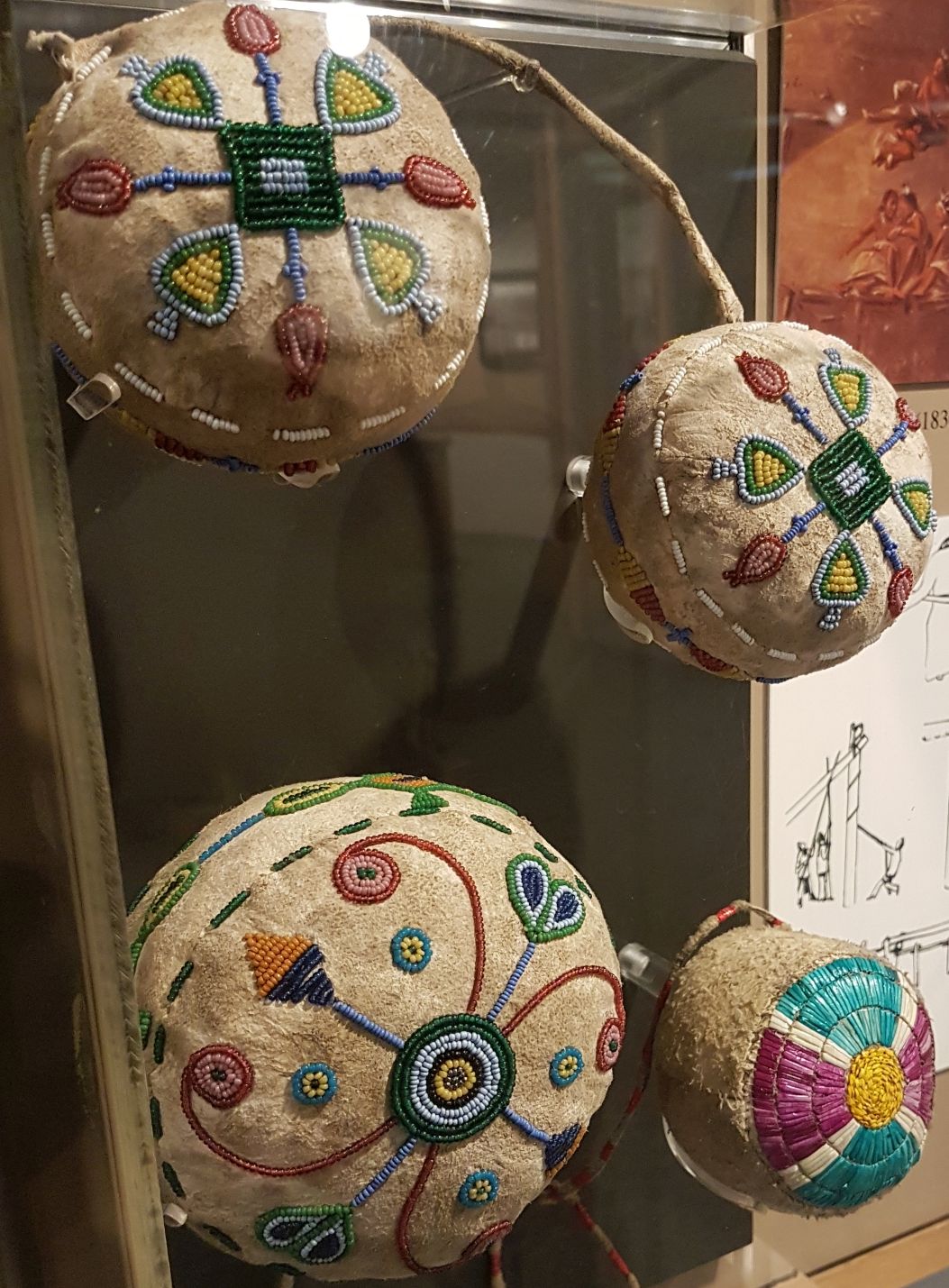
This display case contains small leather balls decorated with glass beads or porcupine quills. The designs are sort of abstract floral.
Another exhibit case showing quill- and bead work. Photo: Lotte Govaerts
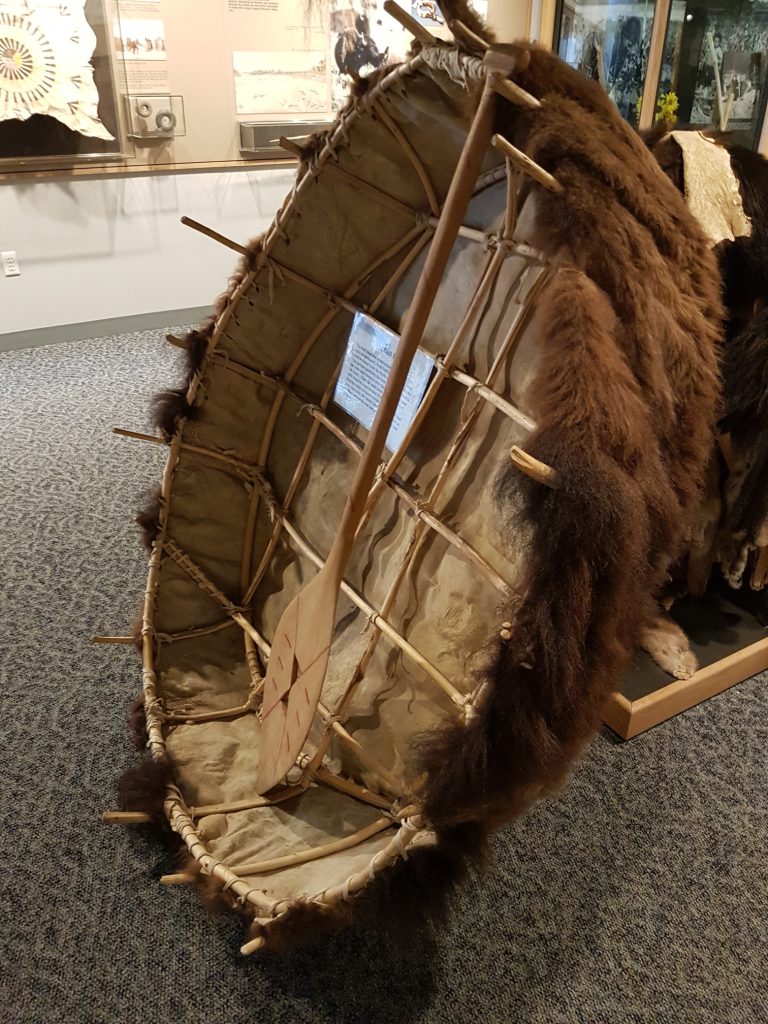
The bull boat is sitting on the carpeted floor of the museum, on its side, showing the willow frame on the inside. A wooden paddle is inside.
A “bull boat” replica. These were made out of willow frames, covered with bison skin. Photo: Lotte Govaerts.

The ranger on duty also took us inside the earth lodge replica just outside the visitor center. The earth lodge is furnished, though wintertime displays are a bit more sparse than those you can see there during summer.
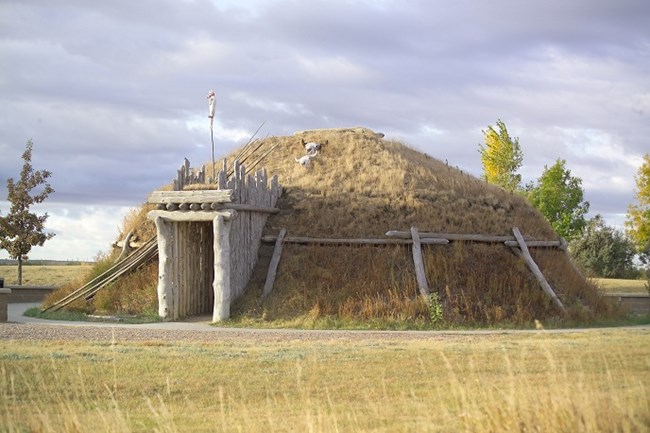
A photo of the outside of the earth lodge at Knife River Indian Villages, during nicer weather. Photo: National Park Service.
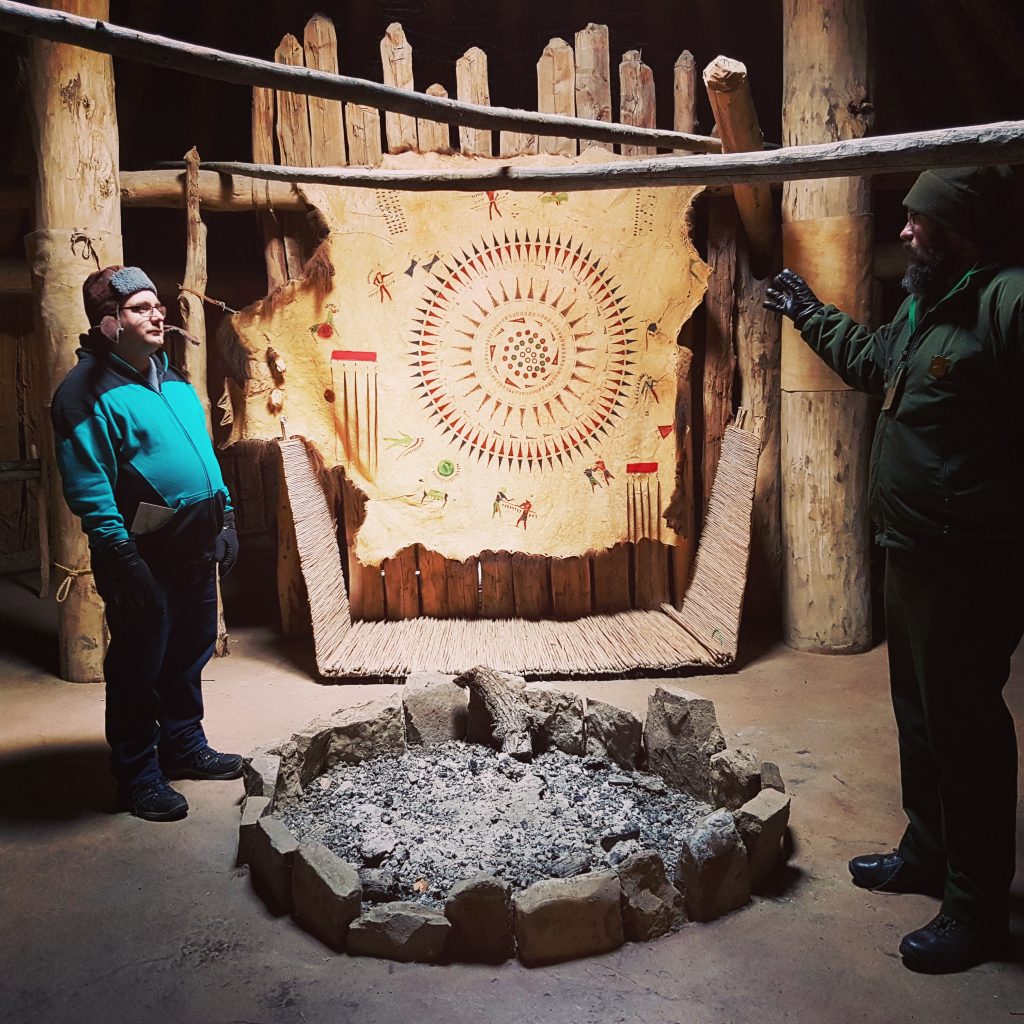
My friend Mat and a park ranger standing inside the earth lodge, on opposite sides of the central hearth. Hanging up behind them is a decorated bison skin.
Inside the earth lodge. Mat listens to the ranger telling us many things about the park, the region, and their history. As you can see, there was no fire going, but we were sheltered from the wind inside, so we were able to stay out there for quite a while without freezing. Photo: Lotte Govaerts.
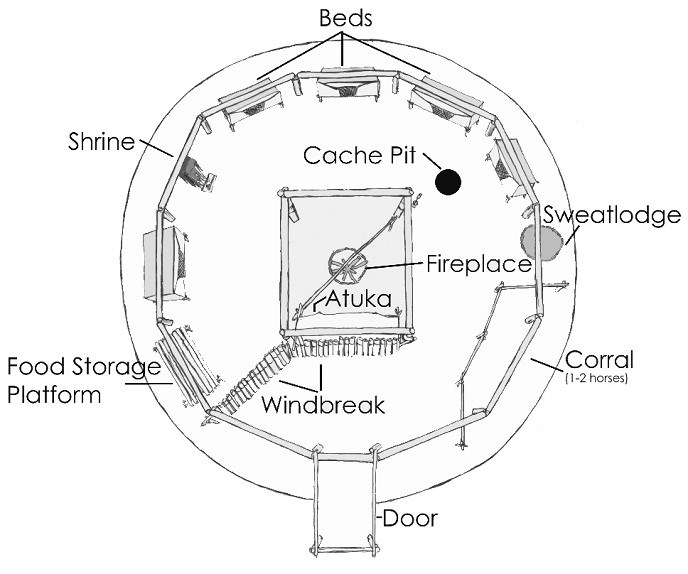
Overhead view diagram of the earth lodge. Labeled features are beds along the outside wall, a shrine and a food storage platform also along the wall, the entrance door, which has a little hallway, the windbreak behind the entrance, a corral for 1 or 2 horses. a sweatlodge, and a central fireplace.
A diagram of the inside of an earthlodge. Source: National Park Service.

That concludes this post about our visit to Knife River Indian Villages National Historic Site. Stay tuned for the next (and last) installment in this series, in which I will discuss my visit to Fort Union Trading Post National Historic Site.

Further Reading:

Knife River Indian Villages National Historic Site

Ahler, Stanley A., and Marvin Kay, eds. 2007. Plains Village Archaeology: Bison-Hunting Farmers in the Central and Northern Plains. Salt Lake City: University of Utah Press.

Ahler, Stanley A., Thomas D Thiessen, and Michael K Trimble. 1991. People of the Willows: The Prehistory and Early History of the Hidatsa Indians. Grand Forks, North Dakota: University of North Dakota Press.

Leave a Reply